You don’t need to be creative yourself to raise a child who loves making art.
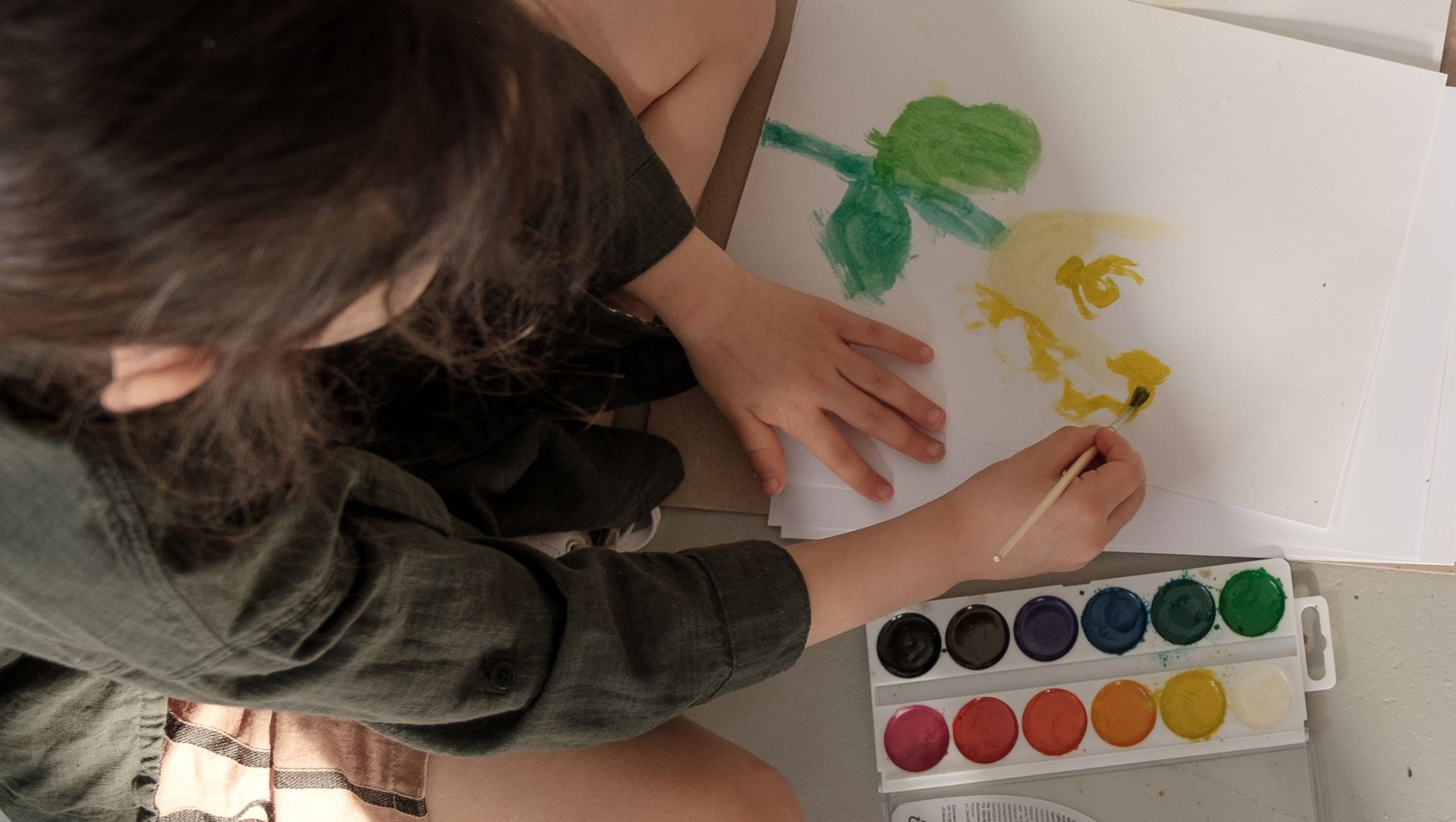
There’s something pretty special about watching your child get completely lost in drawing, painting, or creating something out of nothing. No rules, no overthinking, just imagination doing its thing.
But as parents, it can sometimes feel a bit daunting. What if you’re not “creative” yourself? Should you be guiding them more? Or stepping back?
We spoke with Angela Heemskerk from Creative Sparks, who shared some refreshingly grounded advice – the kind that takes the pressure off both kids and parents.

It Starts With Freedom
One of the most powerful things Angela reflects on from her own creative journey is how little pressure there was to be anything in particular.
That freedom gave her space to follow what she naturally loved: colour, creativity, and expression. She sold her first painting at just 16 as part of a school project, and that early encouragement gave her the confidence to keep going.
Later, while working as a barista after moving to Auckland, she continued painting on the side – selling pieces, taking on commissions, and eventually exhibiting her work in galleries and community events.
It’s a good reminder that creativity doesn’t need to be rushed or shaped into something serious too early. Sometimes it just needs room to grow.
Encouragement Matters (But Not the Kind You Think)
Interestingly, Angela says she wishes she’d had more encouragement in certain areas, not pressure, but gentle guidance.
Things like learning simple techniques (hello, colour mixing!) or being supported to explore more abstract, feeling-led art earlier on.
“I’m very drawn to creating from feeling and colour,” she says, “and I wish I’d been encouraged to explore that more deeply.”
It’s a nice balance to keep in mind. Children don’t need pressure to perform, but a little guidance and exposure can open up whole new creative directions.
You Don’t Have to Be “Creative” to Raise a Creative Kid
This is something a lot of parents worry about but Angela is quick to reassure that you don’t need to be artistic yourself to support your child.
Simple things can make a big difference:
- Art classes can be hugely valuable, especially with limited arts resources in schools. They give kids a safe, low-pressure space to experiment.
- Gallery visits (even quick ones) can spark curiosity and new ideas.
- Pay attention to what your child notices — this one is gold.
If your child points out an interesting cloud, a pattern, or a colour while you’re out and about, that’s your cue.
“Why don’t we paint that when we get home?”
It doesn’t need to be a big planned activity. Those small, spontaneous moments are often where the magic happens.
Take the Pressure Off Being “Good”
If there’s one takeaway, it’s this: creativity thrives without pressure.
Instead of focusing on whether something looks “good”, Angela suggests simply noticing what your child is doing.
It might sound like: “I’ve noticed you’ve been drawing people a lot lately,” or , “I love how you’ve used colour here,” or, “It looks like you really enjoyed making this.”
These kinds of comments shift the focus from outcome to effort, curiosity, and enjoyment, which is exactly where creativity grows.
Let It Be Play
At the end of the day, art for kids should feel like play. Messy, expressive, sometimes random, and completely their own.
You don’t need a perfect setup or a structured plan. Just a bit of space, a little encouragement, and a willingness to follow their lead.
Because when children feel free to create without judgement, they’re not just making art. They’re building confidence, learning to trust their ideas, and discovering what they love.
And that’s something that sticks with them for life!
—
If your child is showing an interest in art and you’d love to nurture it further, Angela Heemskerk runs Creative Sparks — local art classes in Birkenhead that are designed to give kids a safe, encouraging space to explore, experiment, and build confidence.